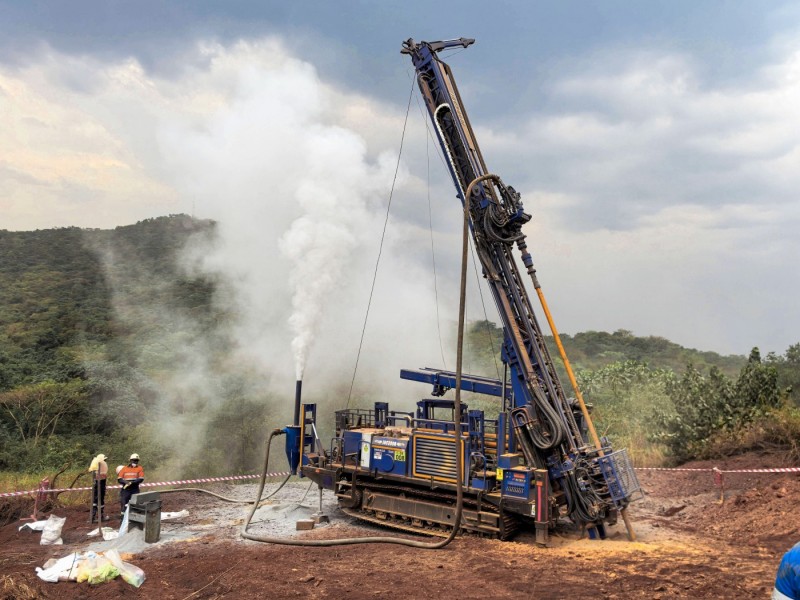
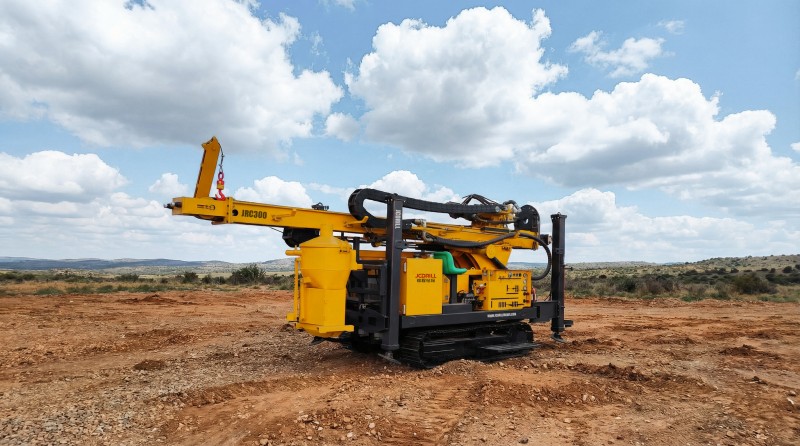
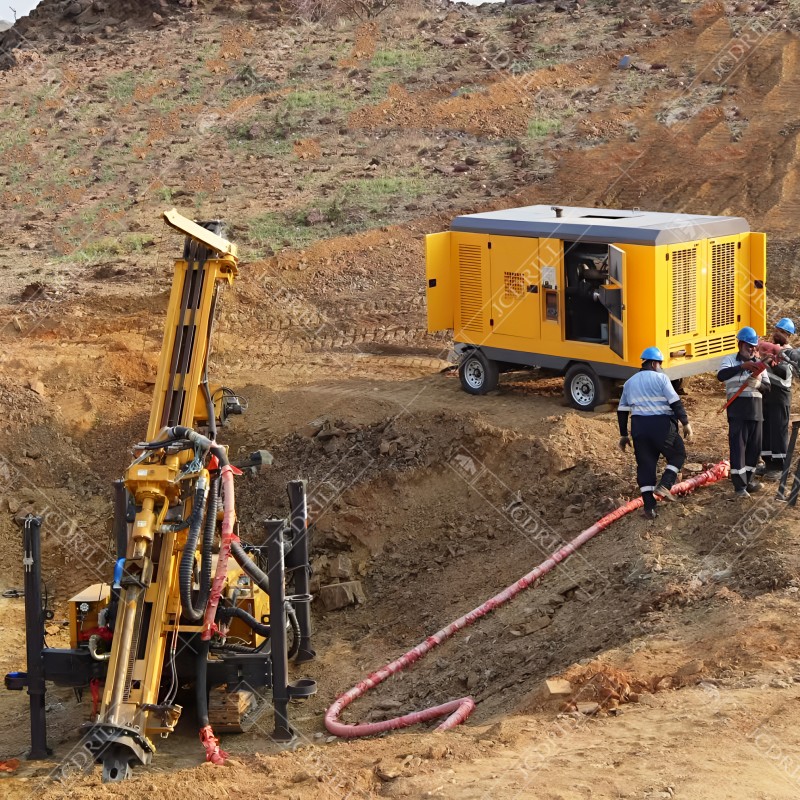
In geotechnical engineering, RC drilling rigs are valued for their ability to produce high-quality subsurface information that supports site characterization, foundation design, and risk assessment. Their distinctive circulation method — where cuttings are transported from the bottom of the hole to the surface through the inner pipe — enhances sample recovery and reduces mixing of materials from different strata, which is crucial for accurate geotechnical interpretation.
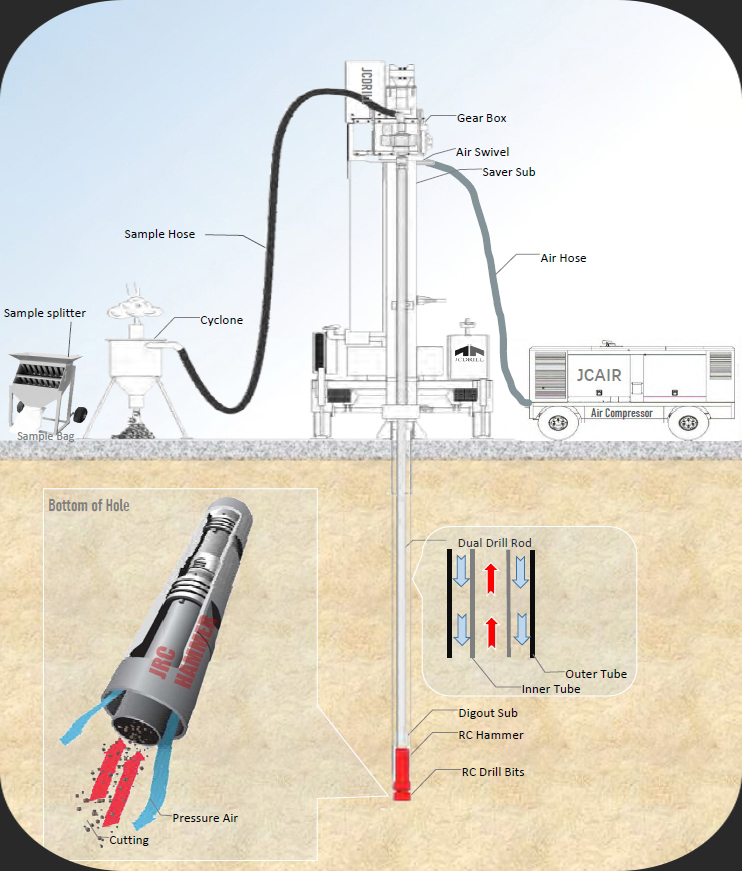
How Reverse Circulation Works
In an RC drilling system, drill rods consist of an outer tube and an inner tube. Compressed air is injected between these tubes and carries rock chips upward through the inner tube as drilling progresses. This reverse flow mechanism contrasts with conventional drilling, where cuttings travel up the annulus between the drill rod and the borehole wall, often leading to sample degradation or contamination. The RC approach yields clean, discrete samples that are better suited for laboratory testing and stratigraphic logging.
Key Roles in Geotechnical Engineering
1. Subsurface Sampling and Soil Stratigraphy
One of the primary applications of RC drilling in geotechnical studies is obtaining representative samples of soil and rock layers. The improved sample quality supports accurate identification of soil types, layer boundaries, and the presence of inclusions such as gravel or cobbles. These data are fundamental inputs for geotechnical profiles and borehole logs used in engineering design.
2. Rock and Soil Strength Characterization
RC drilling rigs enable engineers to collect rock chips and soil cuttings that can be analyzed in the laboratory to determine key geotechnical parameters, such as grain size distribution, plasticity, strength, and mineral composition. These properties influence decisions on foundation type, bearing capacity, and potential ground improvement measures.
3. Environmental and Hydrogeological Investigations
While primarily a geotechnical tool, RC drilling also supports environmental assessment and hydrogeological investigations when soil stratigraphy and subsurface conditions must be understood before detailed testing or monitoring well installation. The method’s ability to recover clean cuttings facilitates analyses of contamination profiles, groundwater-bearing layers, and soil permeability.
Technical Advantages in Geotechnical Context
RC drilling rigs offer several performance characteristics that make them suitable for geotechnical applications:
· Improved Sample Quality: By returning cuttings through the inner pipe, RC rigs produce discrete, less contaminated samples that are more representative of in situ conditions.
· High Drilling Speeds: Compared with traditional drilling, the reverse circulation method improves penetration rates and operational efficiency, particularly in hard ground or mixed materials.
· Dust and Cuttings Control: Many modern RC rigs integrate dust collection and cyclone separators, improving environmental compliance and safety at the drilling site.
· Versatility: RC rigs can be used for vertical and inclined drilling, making them adaptable to complex geotechnical programs that require angled boreholes or multiple sample points.
Practical Considerations
While reverse circulation rigs excel in sample quality and speed, selecting the appropriate drilling method for geotechnical studies also depends on project goals, ground conditions, and required data types. For example, where continuous core samples are needed for rock mass quality assessment, core drilling might be used in conjunction with RC sampling. In broader site investigations, a combination of RC, auger, and coring techniques often yields the most comprehensive subsurface dataset.
Summary
Reverse circulation drilling rigs are a robust solution for geotechnical analysis and site investigation due to their efficient sample return mechanism, improved cuttings quality, and operational performance across a range of ground conditions. They play a critical role in informing engineering decisions for foundations, earthworks, and structural design by delivering reliable subsurface information with reduced contamination and greater clarity than many traditional drilling approaches.