Core Functional Capabilities
Precision Foundation Drilling and Pile Installation
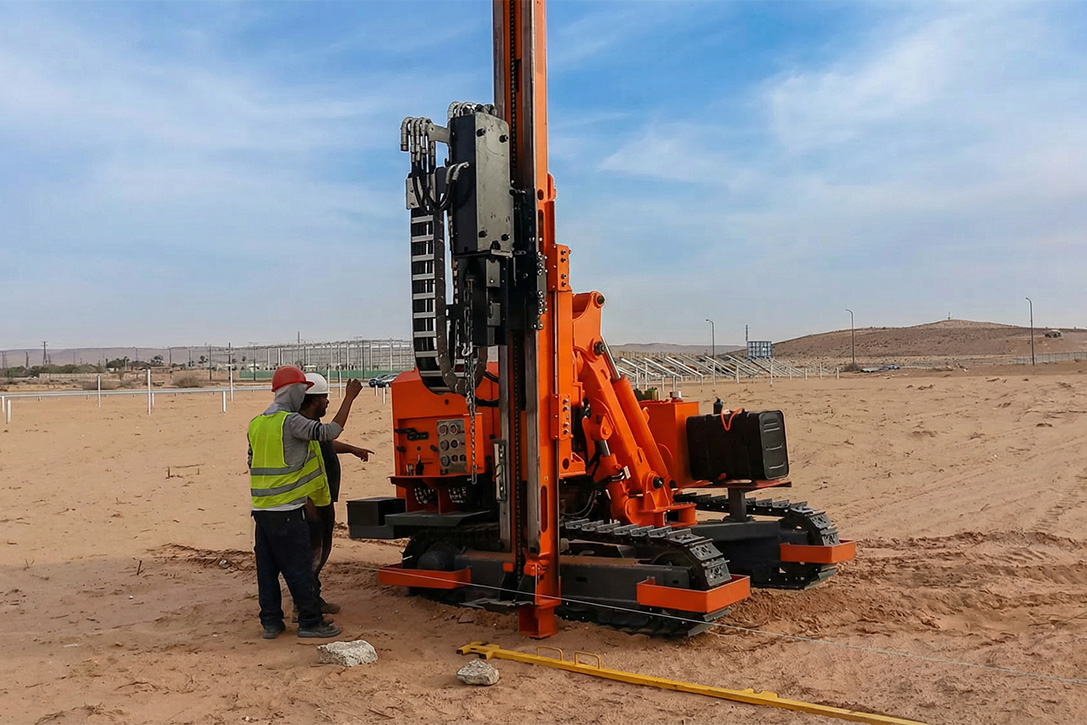
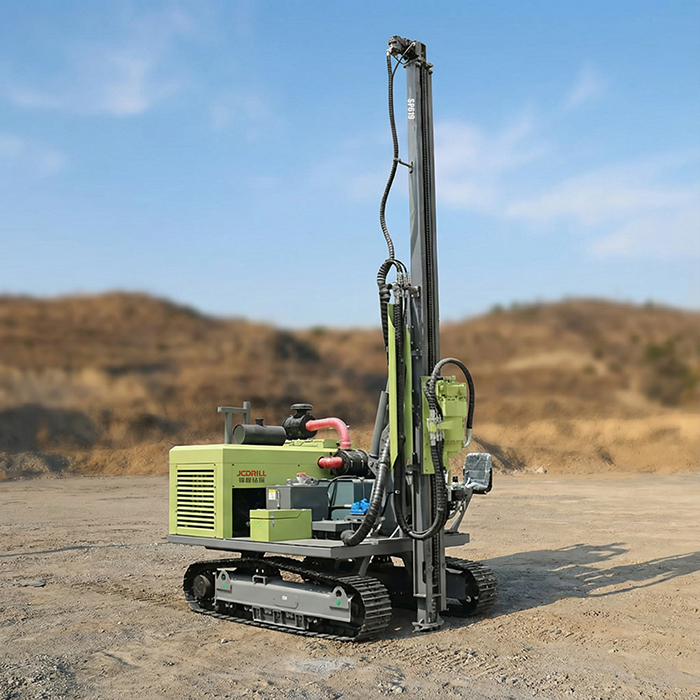
The primary function of photovoltaic drilling rigs is to create foundation boreholes or drive piles into the ground to support the PV array framework. These holes or driven elements become attachment points for steel posts, screw piles, or anchors that hold the solar support structures. The rig’s drilling system — which may use auger, DTH (down-the-hole) hammer, or rotary drilling tools — allows it to penetrate soils of differing hardness and composition with controlled accuracy.
Adaptability to Multiple Soil and Terrain Types
Solar farms are often constructed on a wide range of geotechnical conditions, from flat desert soils to sloping or rocky terrain. Photovoltaic drilling rigs are engineered with hydraulic power systems and robust undercarriages (e.g., crawler tracks) that enable effective drilling or pile driving across varied ground conditions. This adaptability helps ensure vertical alignment of each support post, which is critical for panel performance and structural integrity.
Multi-Mode Drilling and Installation
Many photovoltaic rigs are multi-functional — capable of performing different drilling and piling methods depending on project requirements:
● Auger or rotary drilling for creating precise holes in soil or mixed materials.
● DTH hammer drilling for penetrating harder subsoils or shallow rock layers.
● Screw pile or helical pile installation by driving or rotating piles directly into the ground where appropriate.
This flexibility reduces the need for multiple machines on site and enhances productivity.
Engineering Applications in Solar PV Construction
Ground-Mounted Solar Farm Foundations
In large PV power plants, mounting structures must be anchored securely to resist wind loads, thermal expansion forces, and other environmental loads throughout the system’s operational life. Photovoltaic drilling rigs execute the foundational drilling and pile driving necessary to support these loads, ensuring that each row of panels is erected on a consistent and level base across the entire installation.
Foundation Preparation on Challenging Soil Conditions
On sites with variable soil types — from soft clays to dense gravel or near-surface rock — these rigs adjust drilling methods and tools to meet engineering specifications. This capability allows project engineers to maintain alignment tolerances and achieve required bearing capacities without extensive manual excavation or major soil replacement.
Integration with Other Construction Elements
Beyond drilling and pile installation, photovoltaic drilling rigs can support pre-drilling for anchors, micro-pile drilling, and even boreholes for electrical grounding or geotechnical instrumentation where required by project design. Their versatility makes them not only foundational equipment but also part of broader site preparation tasks.
Technical Features Supporting Performance
● Hydraulic Drive System: Provides consistent torque and feed pressure necessary for drilling through varied soil densities and depths, enhancing penetration efficiency.
● Adjustable Mast and Boom: Enable multi-angle drilling and compensation for ground unevenness, improving hole alignment accuracy.
● Crawler Mobility: Tracks or robust undercarriage systems allow the rig to traverse rough or sloped terrain typical of solar fields.
● Multi-Purpose Tooling: Interchangeable drilling bits and pile driving attachments support diverse tasks from auger drilling to screw pile installation.
Operational Considerations
Effective use of photovoltaic drilling rigs requires coordination with structural design and geotechnical surveys. Decisions about hole spacing, pile type (e.g., driven, drilled, screw), and drilling method are based on soil data, load requirements, and environmental conditions. The rig must be configured accordingly to meet engineering tolerances while optimizing cycle times and minimizing site disturbance.
Conclusion
Photovoltaic drilling rigs play a fundamental role in ground-mounted solar PV construction by facilitating precision foundation drilling, pile installation, and adaptable operation across diverse site conditions. Their multi-method capability and terrain adaptability make them essential for ensuring the stability and longevity of solar support structures, contributing to efficient execution of modern renewable energy infrastructure projects.