1. Core Functions of Quarrying Rock Blasting Drilling Rig
Precision Blast Hole Drilling
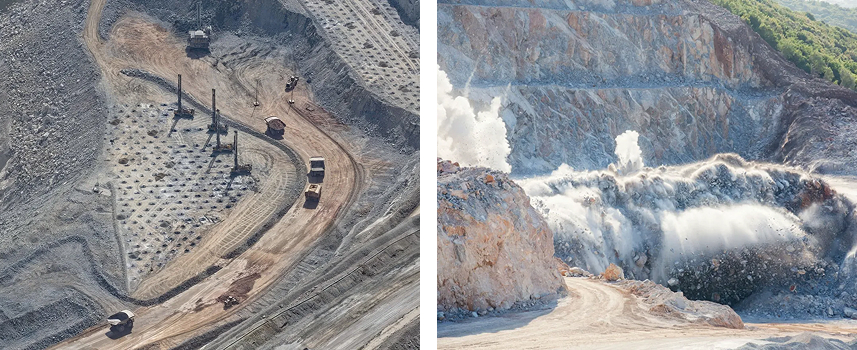
The primary function of a rock blasting drilling rig in a quarry is to create blastholes — vertical, inclined, or horizontal boreholes placed in systematic patterns across a rock face. These holes are later loaded with explosives according to a blasting design that optimizes rock breakage, minimizes flyrock, and controls vibration and noise. The accuracy of hole placement, diameter, and depth directly influences the efficiency and safety of subsequent blasting operations.
Adaptable Drilling Methods
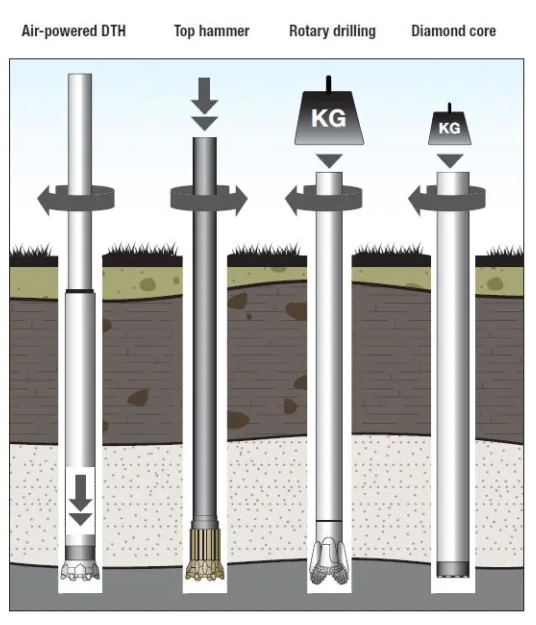
Modern rigs utilize several drilling technologies:
Down-the-hole (DTH) drilling:
A pneumatic hammer located at the drill bit delivers impact energy directly to the rock, enabling high penetration rates in hard formations.
Top hammer drilling: The hammer action occurs above the rod, transmitting impact through the drill string; useful in certain bench drilling contexts.
Mobility and Terrain Adaptation
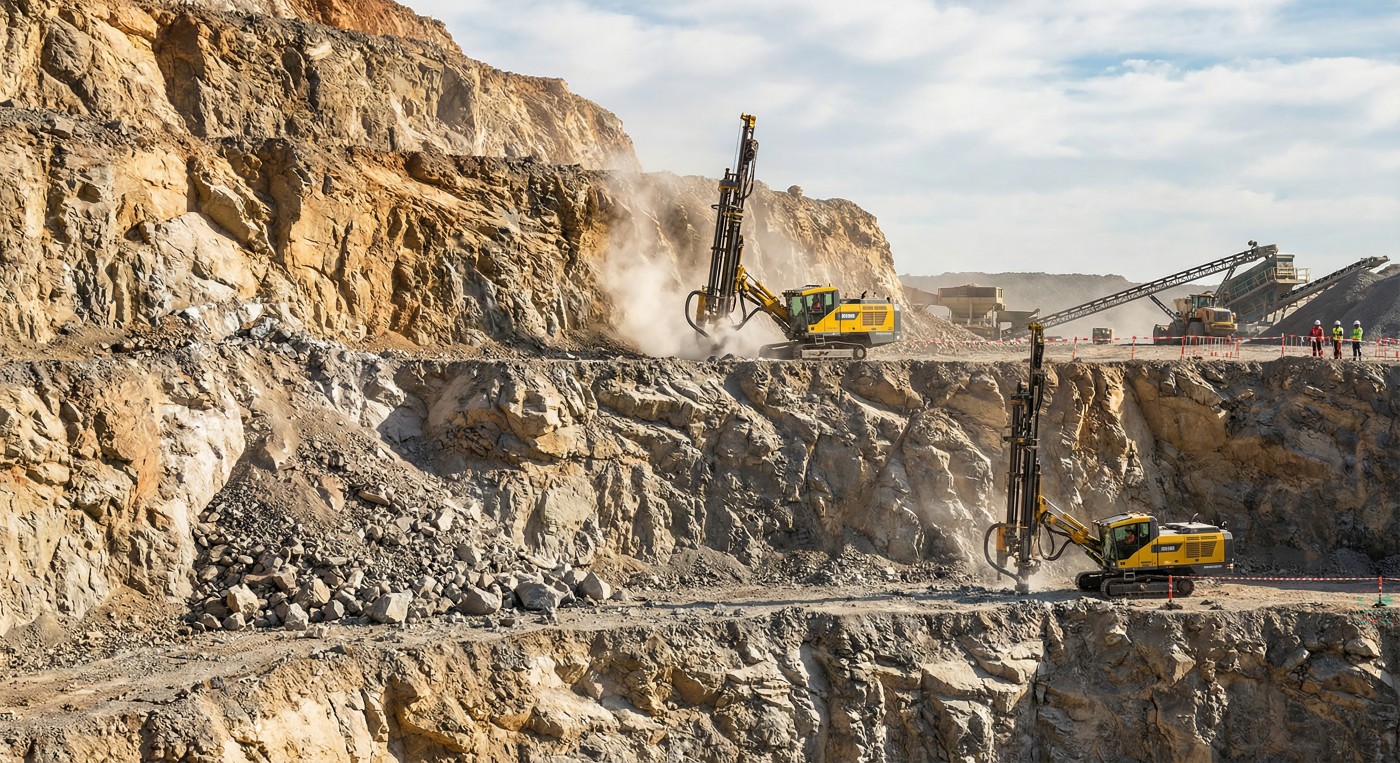
Quarrying drilling rigs are typically crawler-mounted or equipped with robust undercarriages that allow them to operate on uneven bench faces and steep quarry slopes. These rigs can reposition quickly along the bench as rock faces retreat, maintaining productivity while ensuring safe access to drilling points.
High Productivity and Reliability
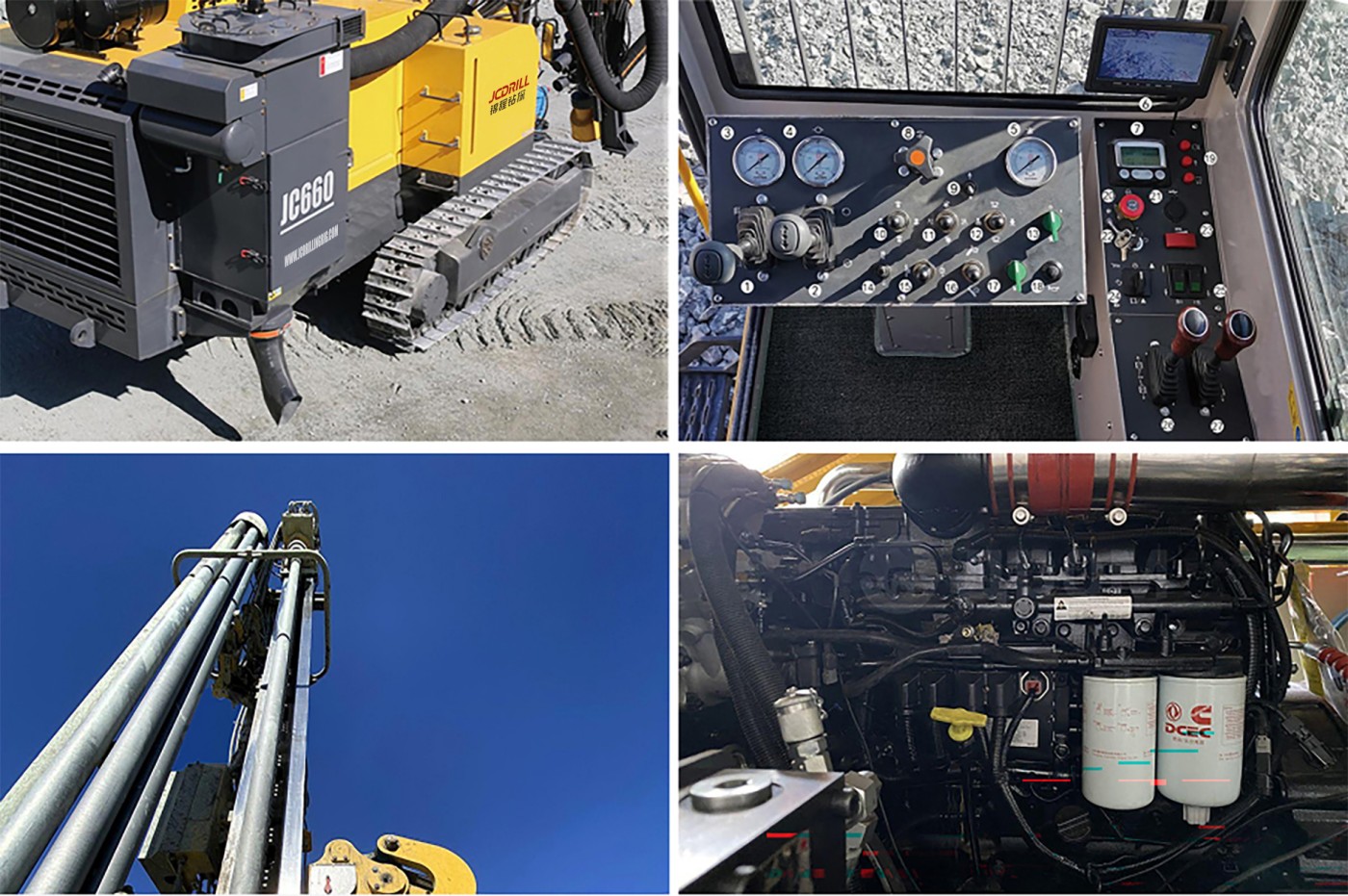
Designed for continuous use in harsh environments, quarry drilling rig emphasize durability, stable power delivery, and efficient hole formation. Advanced models integrate automated features such as hydraulic rod handling, dust collection systems, and centralized controls to reduce operator workload and increase drilling rates per shift.
2. Engineering Applications in Quarrying
Controlled Rock Fragmentation
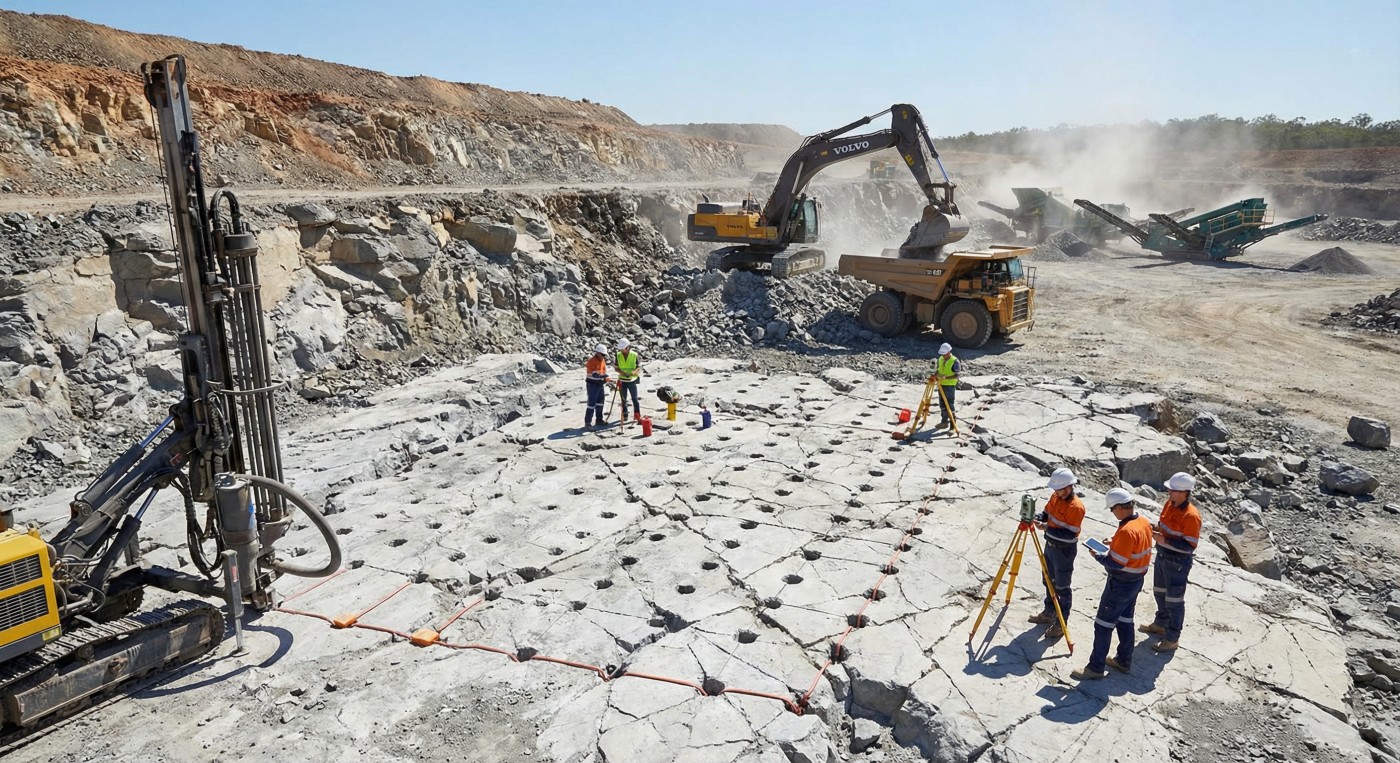
In aggregate production, drilled blastholes are loaded with explosives in a pattern dictated by rock type, bench height, and desired fragment size. The pattern geometry and uniformity of drilling influence fragmentation quality, which directly affects loading, hauling, crushing, and screening efficiency downstream.
Bench Development and Rock Face Advancement
As a quarry expands, benches must be drilled and blasted systematically to advance the rock face safely and efficiently. Rigs are used to prepare drill patterns that follow engineered bench designs, allowing controlled removal of material with minimal environmental impact.
Multi-Directional Drilling
Beyond vertical holes, quarry drilling rig can be configured for inclined or horizontal drilling when geological or blasting design requirements demand such orientations. This capability is particularly useful in stepped benches or irregular rock formations where blast optimization requires non-vertical hole arrays.
Technical Features Supporting Quarry Performance
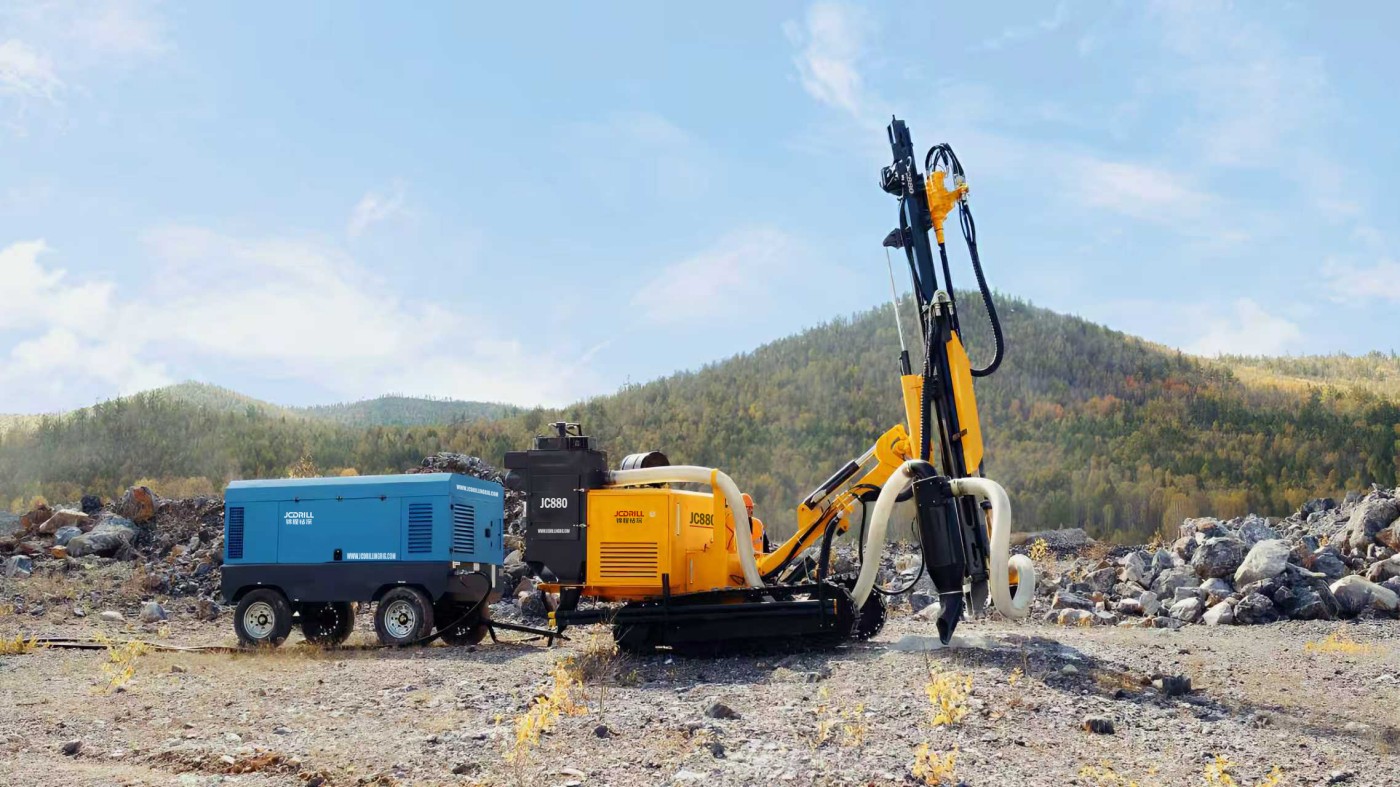
Power Source and Drive Systems: Most quarry drilling rigs are powered by diesel engines driving hydraulic systems that control drilling torque, feed force, and hammer action. This configuration provides the force necessary for hard rock drilling and ensures long service life under continuous loading.
Drill Diameter and Depth Flexibility: Typical blasthole diameters range from medium to large (e.g., 90–350 mm), and maximum drilling depths vary according to rig design and rock conditions. This flexibility allows rigs to match blasting designs for different bench heights and fragmentation objectives.
Dust Management and Safety: Quarrying rigs often include dust suppression or collection systems to reduce airborne particulates during drilling, improving visibility and worker safety on site.
3. Operational Considerations
Efficient drilling for blasting in quarry sites depends not only on rig capabilities but also on drill pattern design, rock geomechanics, and blast engineering principles. Technical planning ensures that hole spacing, depth, and charge distribution achieve uniform breakage while minimizing undesirable effects such as flyrock, excessive vibration, or airblast.
4. Conclusion
In quarry operations, rock blasting drilling rigs are indispensable for transforming intact rock into breakable fragments through engineered blasting. Their ability to deliver precision holes across varying geological conditions, coupled with robust mobility and drilling performance, makes them central to productive, safe, and controlled quarry extraction.