
English





Date 2026.02.12
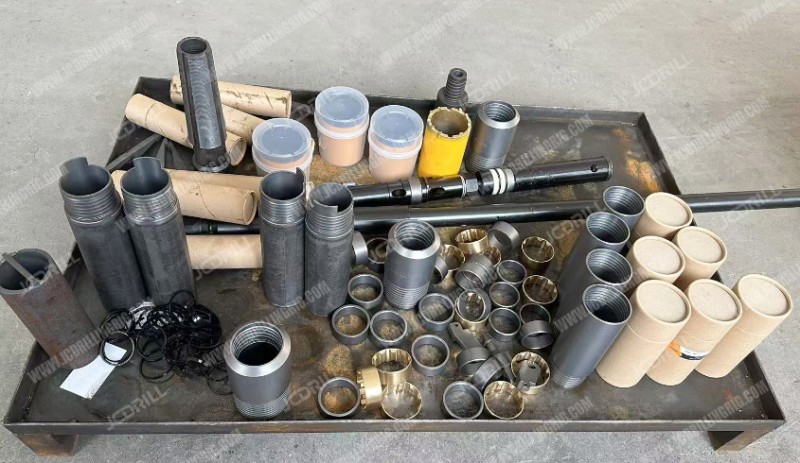
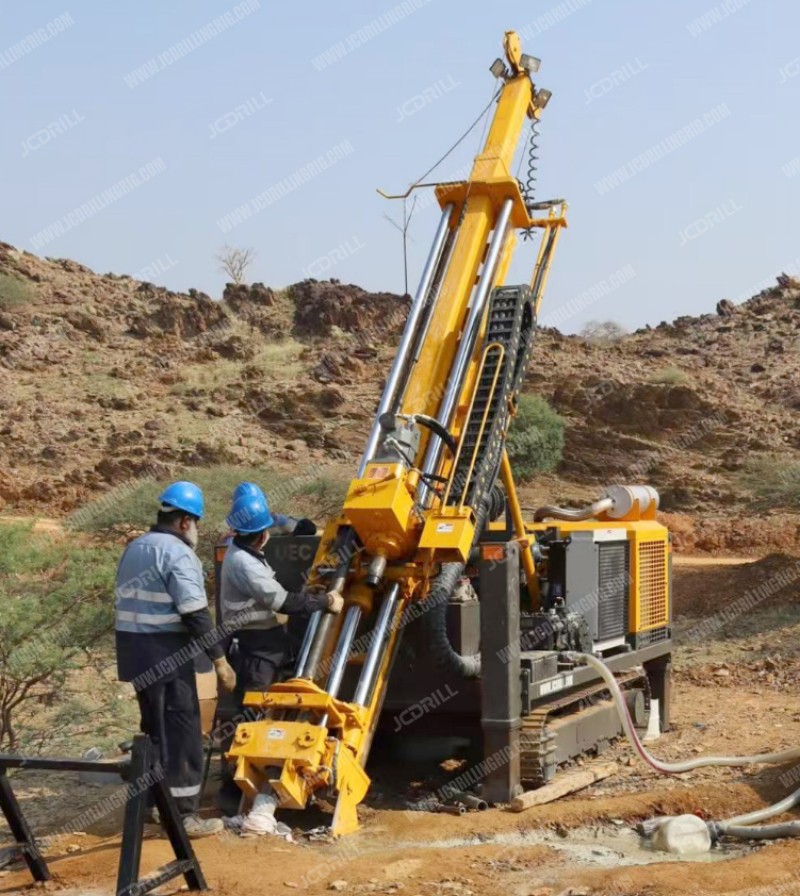
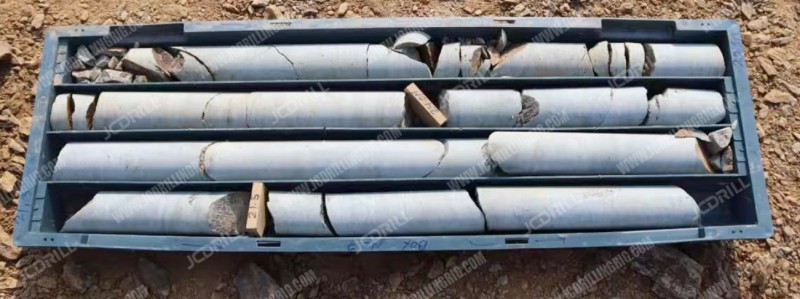
Diamond core drilling is a widely used technique in geotechnical engineering for subsurface exploration and site characterization.
Its ability to recover high-quality, undisturbed core samples makes it invaluable for assessing soil, rock, and other geological materials. Below are the key applications of diamond core drilling in the geotechnical field:
 |
1. Site Investigation & Subsurface Profiling - Lithological Logging: Retrieves intact core samples for detailed geological logging, identifying rock types, bedding planes, and structural features. - Stratigraphic Correlation: Helps in mapping soil and rock layers across a site to understand depositional environments. - Depth to Bedrock Determination: Essential for foundation design, slope stability analysis, and tunneling projects. |
|
2. Geotechnical Sampling for Laboratory Testing - Undisturbed Sampling: Provides high-quality samples for lab tests such as: - Unconfined compressive strength (UCS) - Triaxial shear strength - Permeability tests - Consolidation tests - Rock Quality Designation (RQD): Evaluates rock mass quality for engineering purposes. |
 |
3. Structural & Discontinuity Analysis
- Identifies fractures, joints, faults, and shear zones affecting slope stability, tunneling, and foundation design.
- Measures dip and strike of geological structures for stability assessments.
4. Mineralogical & Petrographic Analysis
- Provides samples for mineral composition studies, aiding in:
- Identifying swelling clays (e.g., montmorillonite)
- Assessing chemical weathering effects
- Evaluating rock durability (e.g., slake durability test)
5. Groundwater & Hydrogeological Studies
- Facilitates installation of piezometers for monitoring water tables.
- Helps in assessing aquifer properties (permeability, porosity) via core analysis.
- Detects water-bearing zones and potential seepage paths in dams and tunnels.
 |
6. Geotechnical Design Parameters - Foundation Design: Determines bearing capacity and settlement characteristics. - Slope Stability: Assesses weak planes and shear strength of rock masses. - Tunneling & Underground Works: Evaluates rock mass rating (RMR) and tunneling quality index (Q-system). |
|
7. Construction Material Investigation - Evaluates quarry materials for suitability in: - Aggregates (crushed rock for concrete) - Riprap (erosion control) - Road base materials |
 |
 |
8. Geohazard Assessment - Identifies potential geohazards such as: - Landslide-prone zones - Karst cavities (sinkholes) - Fault zones (seismic risk assessment) |
9. Verification of Geophysical Surveys
- Ground-truths geophysical data (seismic, resistivity, GPR) by providing actual subsurface samples.
10. Environmental Geotechnics
- Assesses contamination spread in rock matrices.
- Helps in designing containment systems for polluted sites.
Advantages of Diamond Core Drilling in Geotechnics
- High Precision: Produces minimally disturbed samples.
- Deep Penetration: Capable of drilling hundreds of meters into hard rock.
- Versatility: Works in various formations (soft soils to hard igneous rocks).
- Core Recovery: Enables detailed visual and laboratory analysis.
Conclusion
Diamond core drilling is indispensable in geotechnical engineering for reliable subsurface data collection, enabling safe and cost-effective design of foundations, slopes, tunnels, and other infrastructure projects. Its ability to provide high-quality samples makes it a preferred method for detailed geotechnical investigations.

The application of reverse circulation (RC) drilling machines with automatic rod exchanging systems in African mining fields has significantly improved exploration and production efficiency.
 Previous
JCDRILL JC660A Integrated DTH Rock Blasting Drill Rig
Unleash Unstoppable Force: The Next Generation of Integrated DTH Drill Rigs
Next

Explore Drilling Solutions
Review Checklist for Underground Core Rig Mobility and Safety
In today’s fast-paced drilling industry, ensuring the mobility and safety of underground core rigs is paramount. Mining companies often face challenges such as terrain variability and safety compliance, impacting overall productivity. The solution lies in utilizing state-of-the-art underground core drilling rigs like those from jcdrillingrig. These rigs not only enhance operational efficiency
Date 2026.10.15
In the realm of mineral exploration, effective and efficient drilling is crucial. The need for reliable and precise methods in confined mine areas has driven many mining professionals to consider underground core drilling. This technique allows for detailed geological assessments, helping companies identify valuable resources while minimizing disruption to the surrounding environment. However,
Date 2026.10.15
The drilling industry is experiencing a notable evolution as companies seek more efficient methods to conduct mineral exploration and geological studies. Understanding the top differences between surface and underground core drilling setups is essential for stakeholders in this field. With specific challenges such as material extraction costs increasing by 25% over the past five years, and
Date 2026.10.12
Surface core rigs are designed for drilling operations that occur on the surface of the ground. They are typically used in mineral exploration and geological studies.
Date 2026.10.09
Fractured ground poses significant challenges for construction and drilling operations, particularly for those utilizing Surface Core Drilling Rig systems. The complexities of recovery can lead to increased project timelines and costs, frustrating contractors and engineers alike. Fortunately, implementing effective recovery techniques can accelerate progress and enhance overall productivity. By
Date 2026.10.08

Please leave your information.
