
English





Date 2026.07.07
The quarry industry has been facing numerous challenges, particularly in managing operational costs, improving safety, and enhancing production efficiency. Issues such as environmental regulations and the increasing demand for sustainability have made it essential for operators to seek innovative solutions. Automated rock blasting drilling techniques provide an answer by streamlining quarry production processes and solving prevalent pain points. For instance, the shift towards automated systems can lead to a 30% reduction in operating costs, directly addressing the financial pressure many quarries face. These technologies not only promise to enhance efficiency but also ensure stricter adherence to environmental regulations, supporting operators in navigating complex market scenarios.
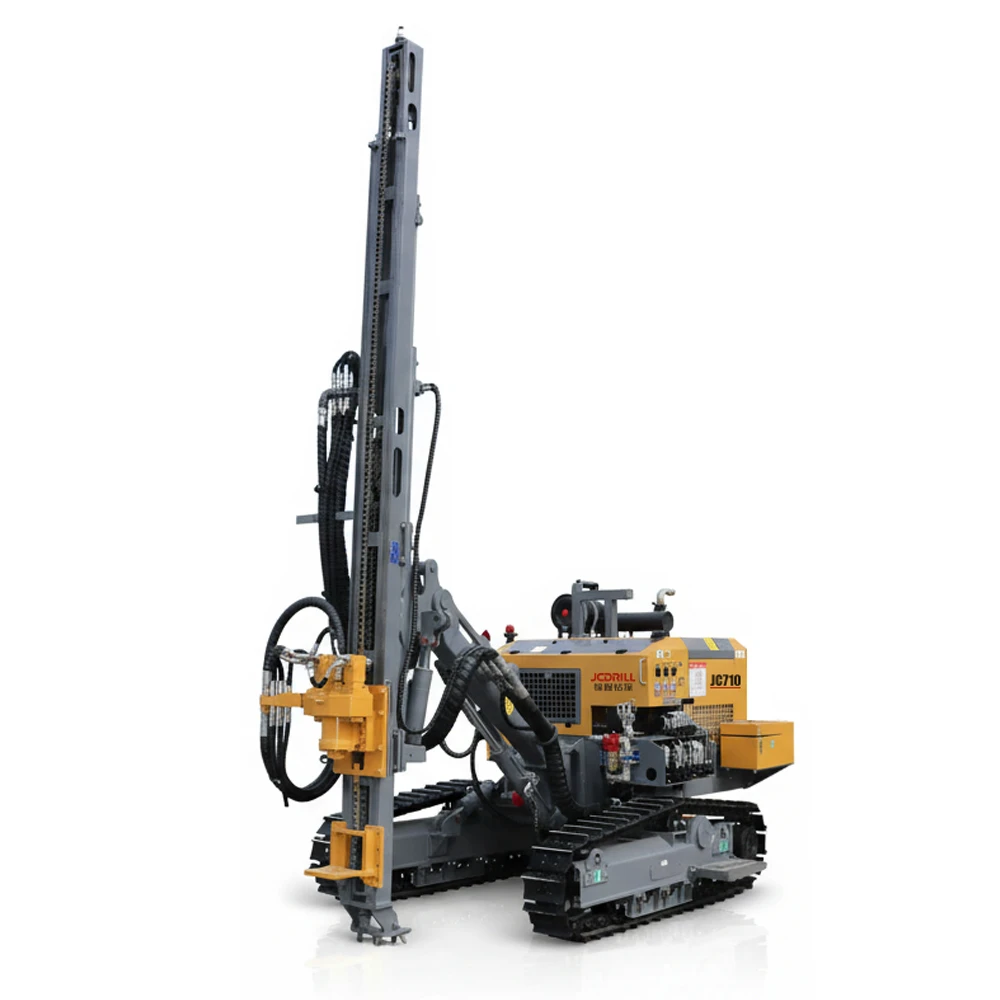
The adoption of automated rock blasting drilling rigs, such as those provided by jcdrillingrig, is driven by several key factors. The integration of advanced robotics and AI technologies has significantly improved the precision and safety of drilling operations. According to the Frost & Sullivan Report (2022), the global market for automated drilling systems is projected to grow at a CAGR of 15% through 2025. This growth is partly attributed to innovations in remote-controlled operations, which enable operators to conduct drilling from a safe distance. In addition, sophisticated data analytics allow for real-time decision-making during rock blasting operations, maximizing output and minimizing waste.
The implementation of AI-driven algorithms in rock blasting operations is one of the leading trends. For example, companies utilizing AI have reported up to a 25% reduction in drilling time due to optimized blast patterns. This technology not only improves efficiency but also minimizes the risk of human error, further enhancing safety in hazardous environments.
As environmental concerns continue to rise, automated drilling solutions are evolving to incorporate sustainable practices. Data from the World Bank indicates that eco-friendly quarry operations can reduce carbon footprints by as much as 40% compared to conventional methods. Innovative blasting materials and techniques are being used to decrease noise and dust emissions, making operations more sustainable and better accepted by surrounding communities.
The Internet of Things (IoT) is reshaping the way quarries monitor their drilling processes. Incorporating IoT devices enables real-time tracking of equipment performance and environmental impact. A study by McKinsey & Company (2021) showed that companies using IoT technology experienced a 20-30% reduction in equipment downtime. This data-driven approach allows operators to make informed decisions, optimizing operations while minimizing costs.
Safety remains a top priority in quarry operations. Automated rock blasting drilling minimizes the need for human presence in high-risk areas, which leads to a significant drop in workplace accidents. According to industry data, automated systems can reduce injuries by as much as 40%, making the workplace safer for all employees. As safety standards evolve, investment in automated drilling rigs becomes indispensable.
With major advances in automation, quarry operators are experiencing enhanced productivity levels coupled with reduced operational costs. According to a survey from The Institution of Mechanical Engineers (2022), automated rock drilling has led to a 50% increase in production rates in some cases. By utilizing efficient machines like those from jcdrillingrig, quarries can maximize output while minimizing labor costs.
Quarry buyers must now adapt to a rapidly changing environment where technological advances dictate market competition. Implementing automated rock blasting drilling technologies not only improves efficiency but also aligns with the industry's shift towards sustainability. Buyers who invest in these innovations can expect improved profitability and a greater competitive edge. Furthermore, data-driven decision-making enhances transparency and trustworthiness with stakeholders, ultimately leading to stronger business relationships.
For quarry operators considering the transition to automated rock blasting drilling, here are several practical steps:
Automated rock blasting drilling involves the use of advanced technology and robotics to conduct drilling and blasting operations in quarries, improving precision and efficiency while enhancing safety.
Quarry operators can expect savings of up to 30% on operational costs through increased efficiency and reduced labor requirements by implementing automated solutions.
Yes, automated drilling rigs significantly reduce the need for human presence in high-risk areas, leading to a reported 40% decrease in workplace injuries.
Look for a provider with a proven track record in the industry, specialized knowledge in automated systems, and the ability to customize solutions that meet your specific quarry needs, such as jcdrillingrig.
Review Checklist for Blast Hole Accuracy, Dust Control, and Mobility
In the demanding world of mining, specifically in blast hole drilling, stakeholders often encounter critical issues that can severely impact productivity—accuracy, dust control, and mobility. These challenges can lead to costly delays and environmental concerns. For instance, a mining company in Nevada faced a 15% production decrease due to inaccurate blast hole positioning, which resulted in
 Previous
The application of reverse circulation (RC) drilling machines with automatic rod exchanging systems in African mining fields has significantly improved exploration and production efficiency.
Next

Explore Drilling Solutions
Top Differences Between Surface and Underground Core Drilling Setups
The drilling industry is experiencing a notable evolution as companies seek more efficient methods to conduct mineral exploration and geological studies. Understanding the top differences between surface and underground core drilling setups is essential for stakeholders in this field. With specific challenges such as material extraction costs increasing by 25% over the past five years, and
Date 2026.10.12
Surface core rigs are designed for drilling operations that occur on the surface of the ground. They are typically used in mineral exploration and geological studies.
Date 2026.10.09
Fractured ground poses significant challenges for construction and drilling operations, particularly for those utilizing Surface Core Drilling Rig systems. The complexities of recovery can lead to increased project timelines and costs, frustrating contractors and engineers alike. Fortunately, implementing effective recovery techniques can accelerate progress and enhance overall productivity. By
Date 2026.10.08
Choosing the right surface core drilling rig is a critical decision for exploration and construction professionals. Whether you are drilling for mineral exploration, environmental studies, or geotechnical engineering, the choice between crawler and truck-mounted rigs can significantly impact efficiency and operational costs. This guide addresses key considerations for contractors and project
Date 2026.10.07
In the world of deep exploration drilling, inefficiencies can lead to significant financial losses and project delays. One of the most pressing issues is the inability to obtain accurate geological data in real time. This lack of precision is often attributed to traditional coring methods that can be both time-consuming and prone to human error. In an industry where every minute counts, the
Date 2026.10.06

Please leave your information.
